
Post-Budget Seminar Calls for Gender-Tagging of Education Budget in KP
Peshawar: A post-budget seminar on girls’ education in Khyber Pakhtunkhwa has called for gender-tagging of the education budget and stronger monitoring mechanisms to ensure transparent and effective utilisation of allocated resources
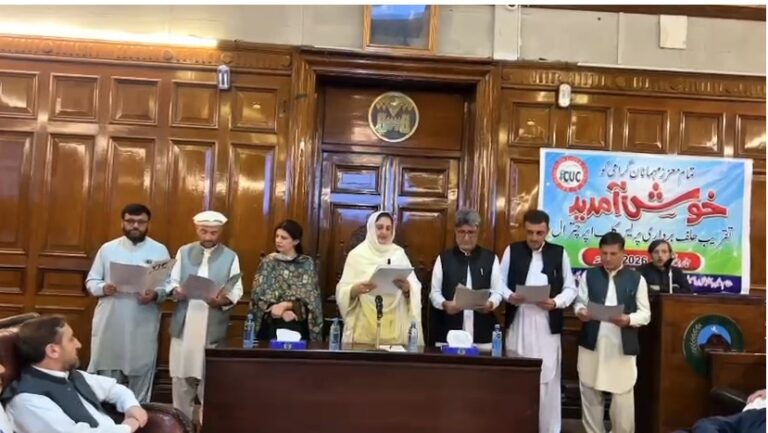
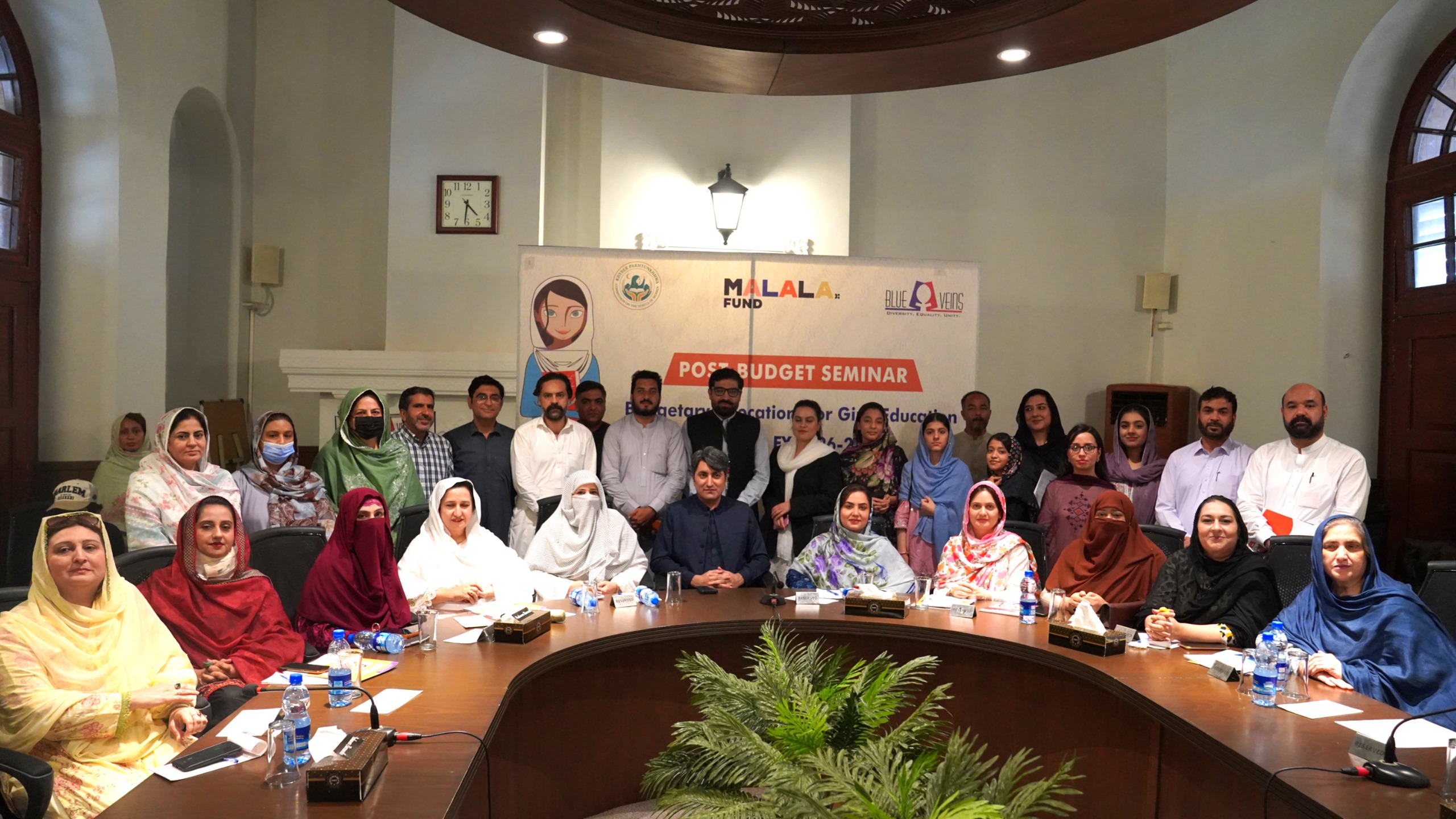
The seminar was organised by the Provincial Oversight and Advisory Committee on Girls’ Education of the Khyber Pakhtunkhwa Commission on the Status of Women, with technical and collaborative support from Blue Veins and Malala Fund. It brought together members of the provincial assembly, government officials, civil society representatives and young girls’ education champions
Chairperson KPCSW Dr Sumera Shams said the committee had held consultations with relevant stakeholders and young girls and submitted recommendations to the Education Department for making the FY 2026–27 education budget more gender-responsive
Officials from the Elementary and Secondary Education Department said the provincial education budget had increased by 10 percent to Rs397 billion, including Rs21 billion for development. The ADP 2026–27 includes 73 new projects covering out-of-school children, Taleem Card, free textbooks, stipends, furniture, missing facilities, reconstruction of damaged schools, additional classrooms, STEM education and IT laboratories
Deputy Secretary Budget Naseem Khan said a Global Virtual School had also been established to support AI-enabled digital learning and help overcome geographical barriers to education
Secretary Provincial Assembly Syed Wiqar Shah stressed that investment in girls’ education was an investment in the province’s social development, while women parliamentarians Shazia Themas, Rehana Ismail and Aiman Jalil pledged to use parliamentary mechanisms to raise girls’ education issues and monitor implementation
Secretary KPCSW Shazia Atta emphasised that gender-tagging of education schemes and programmes was essential to track resource allocation, monitor implementation and assess whether investments were improving educational outcomes for girls
Participants also highlighted persistent gaps in the timely provision of textbooks to girls’ schools and called for stronger monitoring to ensure complete and quality textbook delivery
The seminar concluded with a call for transparent utilisation of education resources, stronger oversight and sustained collaboration among government, parliament and civil society to improve girls’ access to quality education across Khyber Pakhtunkhwa