

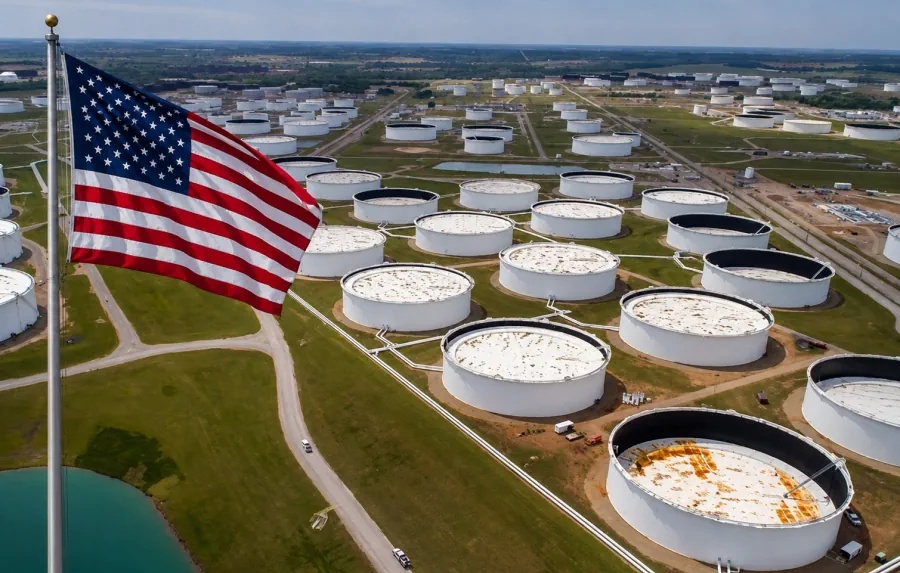
US Oil Reserves Hit 40-Year Low Amid Iran War
The United States is running low on one of its most important energy safety nets as the Iran war continues to disrupt global oil supplies.
Fresh federal data shows that the US Strategic Petroleum Reserve (SPR) fell to around 340 million barrels in June 2026, its lowest level since the early 1980s. The reserve has lost roughly 75 million barrels, or about 18%, since the conflict began in late February.
Washington has been releasing oil from the emergency stockpile to help offset major disruptions in global supplies. The Department of Energy also announced plans to release an additional 172 million barrels after oil shipments were severely affected.
The crisis has been worsened by disruptions around the Strait of Hormuz, a critical route through which a large share of the world’s oil and gas normally passes. The disruption has forced countries to rely heavily on their emergency reserves as millions of barrels of daily production were taken off the market.
US commercial and strategic oil inventories have also fallen sharply. Meanwhile, the Government Accountability Office has warned that parts of the Strategic Petroleum Reserve’s infrastructure are deteriorating and that some stored oil is not readily accessible.
Analysts warn that the remaining accessible reserves could provide only limited protection if the current supply crisis continues. At the same time, fuel prices are expected to remain under pressure, with diesel, jet fuel and petrol prices forecast to rise significantly above pre-conflict levels.
The global impact is even greater. Oil inventories around the world are approaching historic lows, while hundreds of millions of barrels of supply have reportedly been lost since the conflict began.
Although a partial peace agreement has allowed some tanker traffic through the Strait of Hormuz to resume, analysts caution that oil production and global supplies may take months to recover fully.
For the United States, the biggest question now is simple: How quickly can Washington rebuild its emergency oil reserves before the next major energy crisis hits?