
Pakistan’s Blue Economy Has $100 Billion Potential as 85 of 99-Point Roadmap Implemented
KARACHI: Pakistan’s maritime sector has the potential to generate around $100 billion through the blue economy, while authorities say significant progress has been made under a 99-point reform roadmap launched to modernize the country’s ports, shipping, logistics, shipbuilding and fisheries sectors.
According to officials, 85 of the 99 points included in the roadmap introduced on December 24, 2024, have already been implemented.
For decades, Pakistan remained heavily dependent on foreign shipping companies for cargo transportation, while port dredging and shipbuilding activities were also largely carried out with foreign assistance. As a result, Pakistan’s domestic shipping industry accounted for only around 11 percent of national cargo.
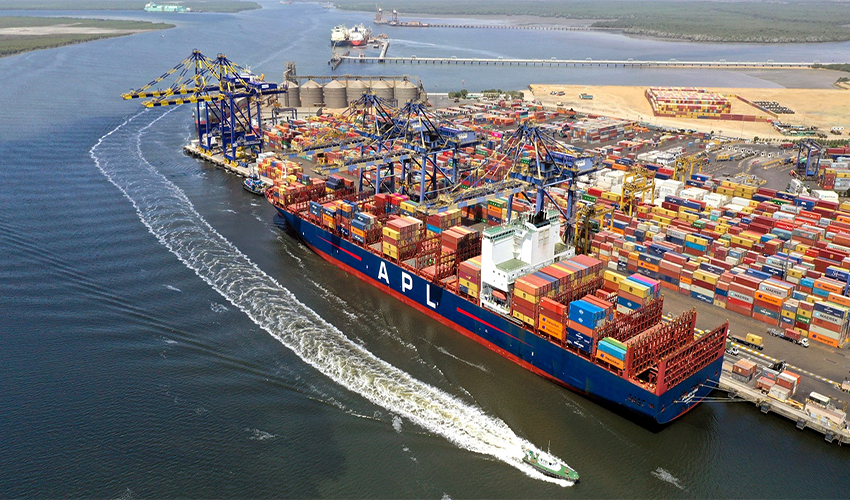
The reform program aims to improve maritime infrastructure and reduce dependence on foreign services. For the first time, a National Ports Master Plan has been prepared, a uniform port tariff introduced, encroachments removed from Karachi Port and modern cargo management systems implemented.
Cargo Clearance Time Reduced
The introduction of faceless customs assessment and the Pakistan Single Window system has reduced cargo clearance time from 53 hours to 18 hours, according to officials. The digital platform connects customs, banks and port operators to streamline trade procedures.
Commercial Shipbuilding Resumes
Commercial container ship construction has also resumed at Karachi Shipyard for the first time since the 1980s. Officials say the vessel is being built at a cost several million dollars lower than comparable market prices.
The National Logistics Corporation has also entered the shipping sector, while Pakistan’s ship-recycling industry has reportedly become operational again after an eight-year gap.
Fishing and Port Dredging
A five-year development plan has been prepared to promote fisheries and aquaculture, with the aim of increasing production and exports while improving incomes in coastal communities.
Meanwhile, the National Dredging and Marine Services project involving NDMS, NLC, Port Qasim Authority and Gwadar Port Authority is intended to reduce Pakistan’s dependence on foreign companies for port maintenance and dredging.
Ports Improve Global Rankings
Officials say the reforms are already producing measurable results. Karachi Port has improved from 99th to 69th in global rankings, while Port Qasim has moved from 74th to 56th.
Together, Karachi Port and Port Qasim are handling more than 100 million tonnes of cargo annually.
Goods declarations have increased by 16 percent, import tax collection by 14 percent and legal electronics imports by 105 percent, according to the figures cited by authorities.
The share of Pakistan National Shipping Corporation in national maritime cargo is also expected to rise from 5 percent to 56 percent, potentially increasing its annual revenue from $162 million to $1.785 billion.
Officials believe continued maritime reforms could attract investment, strengthen Pakistan’s shipping industry, create employment and help establish the country as a major regional transshipment hub.