

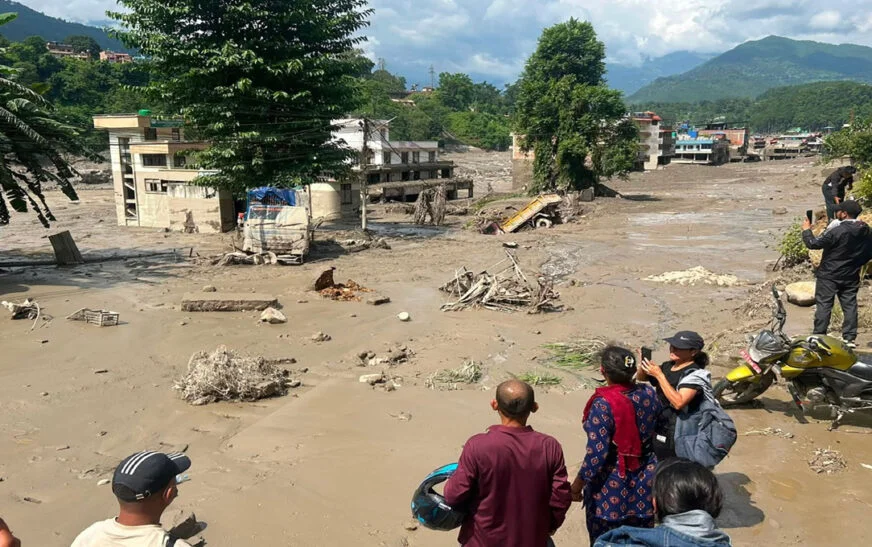
Nepal Flood Disaster: 95 Dead, Hundreds of Tourists Reported Missing
KATHMANDU: A sudden and devastating flood and landslide along the Nepal-Tibet border has caused widespread destruction, leaving at least 95 people dead and hundreds of tourists reported missing, according to information cited from the Nepal Tourism Board.
The disaster struck the border region with little warning, triggering a massive flow of water, mud and debris that swept through the affected area. Several buildings and surrounding infrastructure were reportedly hit as floodwaters surged through the region, creating dangerous conditions for residents, tourists and rescue teams.
Among those reported missing are more than 100 Indian nationals and 12 British citizens, according to the available information. The reports have raised concerns about the fate of foreign tourists who were visiting or travelling through the remote border region when the disaster occurred.
Visuals released from the affected area showed the scale of the destruction. CCTV footage from the Chinese side captured a huge torrent of water and debris crashing into buildings near the border, while footage from Nepal showed people fleeing the area and moving toward safer locations as floodwaters rapidly spread.
The sudden nature of the disaster has complicated rescue and recovery efforts. Rescue teams are reportedly facing major difficulties because of continuing flows of water, unstable ground and large amounts of mud and debris left behind by the flooding and landslides.
Nepal’s foreign minister has expressed concern that the disaster may have been triggered by a combination of natural events, including a possible earthquake followed by an ice-related or landslide event. Authorities on both sides of the border are investigating the circumstances surrounding the disaster to determine exactly what caused the sudden surge of water and debris.
The incident has also prompted an urgent response from Chinese authorities. Chinese President Xi Jinping has directed officials to intensify rescue operations on the Tibetan side and ensure that all possible resources are mobilized to assist those affected by the disaster.
Emergency teams are continuing efforts to locate missing people, evacuate those stranded in dangerous areas and provide assistance to survivors. However, difficult terrain, damaged infrastructure and unstable conditions are making the rescue operation increasingly challenging.
The disaster has once again highlighted the vulnerability of mountainous regions to sudden floods, landslides and other natural hazards. Remote border areas can be particularly difficult to access during emergencies, making early warnings, evacuation planning and rapid emergency response crucial for protecting lives.
Authorities in Nepal and China are expected to continue search and rescue operations while assessing the full extent of the damage. The death toll could rise further as rescue teams reach areas that remain inaccessible and more information becomes available about the missing tourists and local residents.