
The Academic and Research Programme continues to grow, with the HMC Digital Presence programme making a huge splash
PESHAWAR: JUNAID TORU
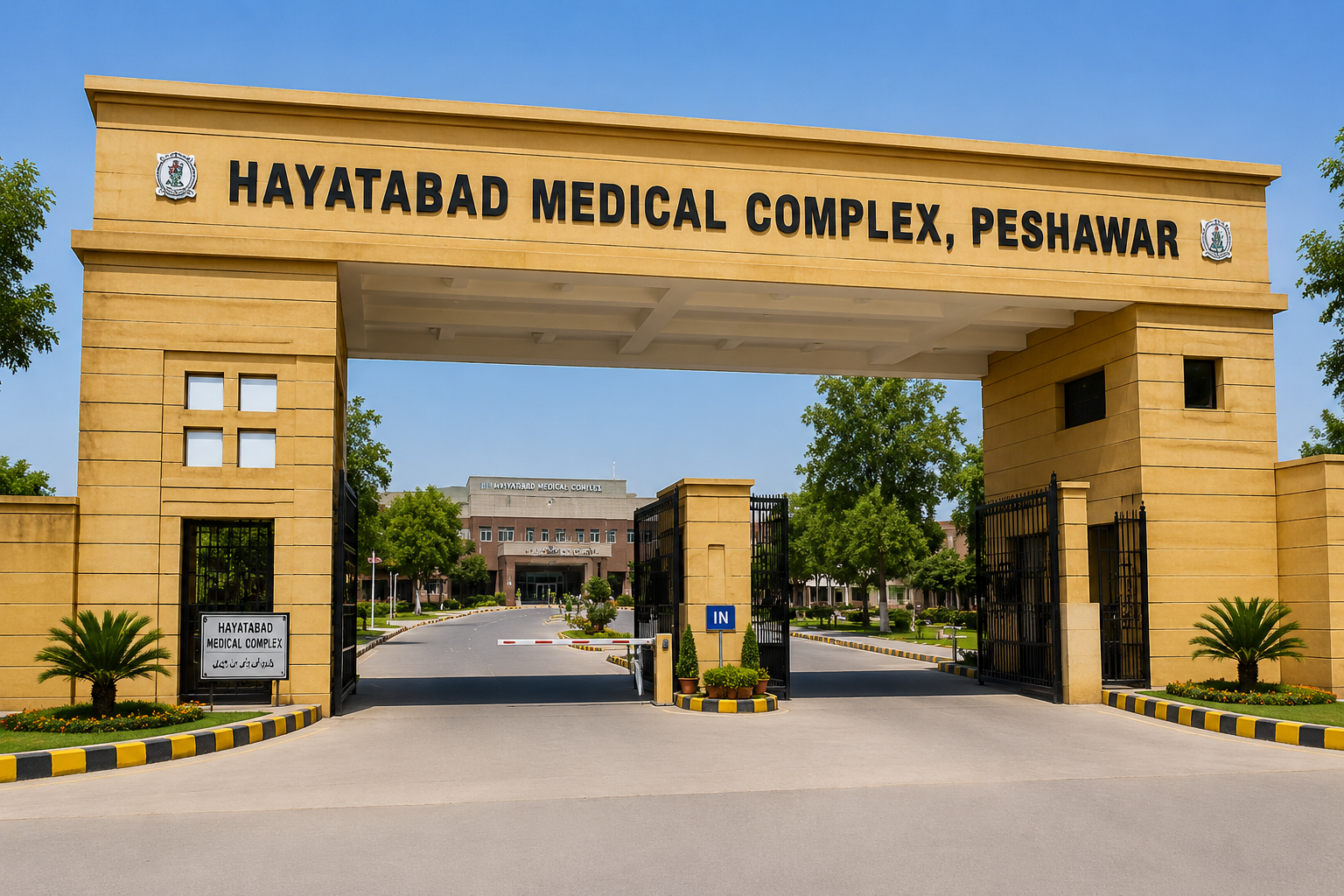
Hayatabad Medical Complex (HMC) has seen a steady and swift development of its digital presence and is making significant strides towards revitalizing its academic and research programme, as the communications and medical education teams’ work in tandem to expand the hospital’s visibility both nationally and internationally.
HMC’s Media Cell has gained more audiences than the initial expectations, since the official digital channels were activated. The hospital’s Facebook page has amassed a reach of around 2000,000 within the first 30 days and has already attracted more than 8,000 new followers in a month with over 200,000 views recorded per day , which is set to lead to monetization of the page in the near future. Content on TikTok that promotes health awareness has been successful in attracting a lot of engagement, and currently has nearly 10 lakh likes (one million) and continues to grow. YouTube, X, Instagram and LinkedIn have all been launched with a content approach covering different videos about health awareness to institutional updates, public service information, seasonal and emergency health advisories and beyond, with steady growth of subscribers, followers and impressions. The digital footprint now makes HMC one of the most prominent Public health institutions in the online sphere of Khyber Pakhtunkhwa.
To support this growth, the hospital has upgraded its internet bandwidth to 800 Mbps network switches with 1 Gbps in Sehat Sahulat office, main store, radiology department, administration block and main OPD. Twenty-six new computer systems and related IT equipment have been provided across clinical and administrative departments and biometric attendance machines, facial-recognition access control and CCTV systems have been fitted in strategic locations such as the nursery and labour room. Access to HMIS is scaling up with staff access, consultants trained on State-Life and clinical modules.
The Department of Medical Education and Research has started a Faculty Development Programme, in a structured manner, with CME accreditation. Promotion cycles have been restarted and academic council meetings held each month (after a two-year interruption).
Research engagement has been moving forward on many fronts, all international. A new Department of Research headed by a Director is working on a four-year MoU with the Critical Care Research Group of Ziauddin University. CREDO, a fully funded outbreak-research training programme, linked with ISARIC, the University of Oxford and WHO/TDR. Director Research has embarked on a partnership with Universitas Airlangga in Indonesia, for a research study on the potential of gabapentin for the treatment of non-alcoholic fatty liver disease (NAFLD). Director Research has succeeded in getting MTI-HMC into OtoSurg (Outcomes of Tonsillectomy Surgery) – an international multicentre paediatric tonsillectomy outcomes database. Department of Reseach and Clinical Audit is actively involved with the Global Health Technologies Coalition regarding collaboration in diagnostics and health innovation. An international research conference will take place in September 2026 and hospital leadership is now interested in setting up a Clinical Trial Unit to channel this dynamic international interest into measurable and formal research.